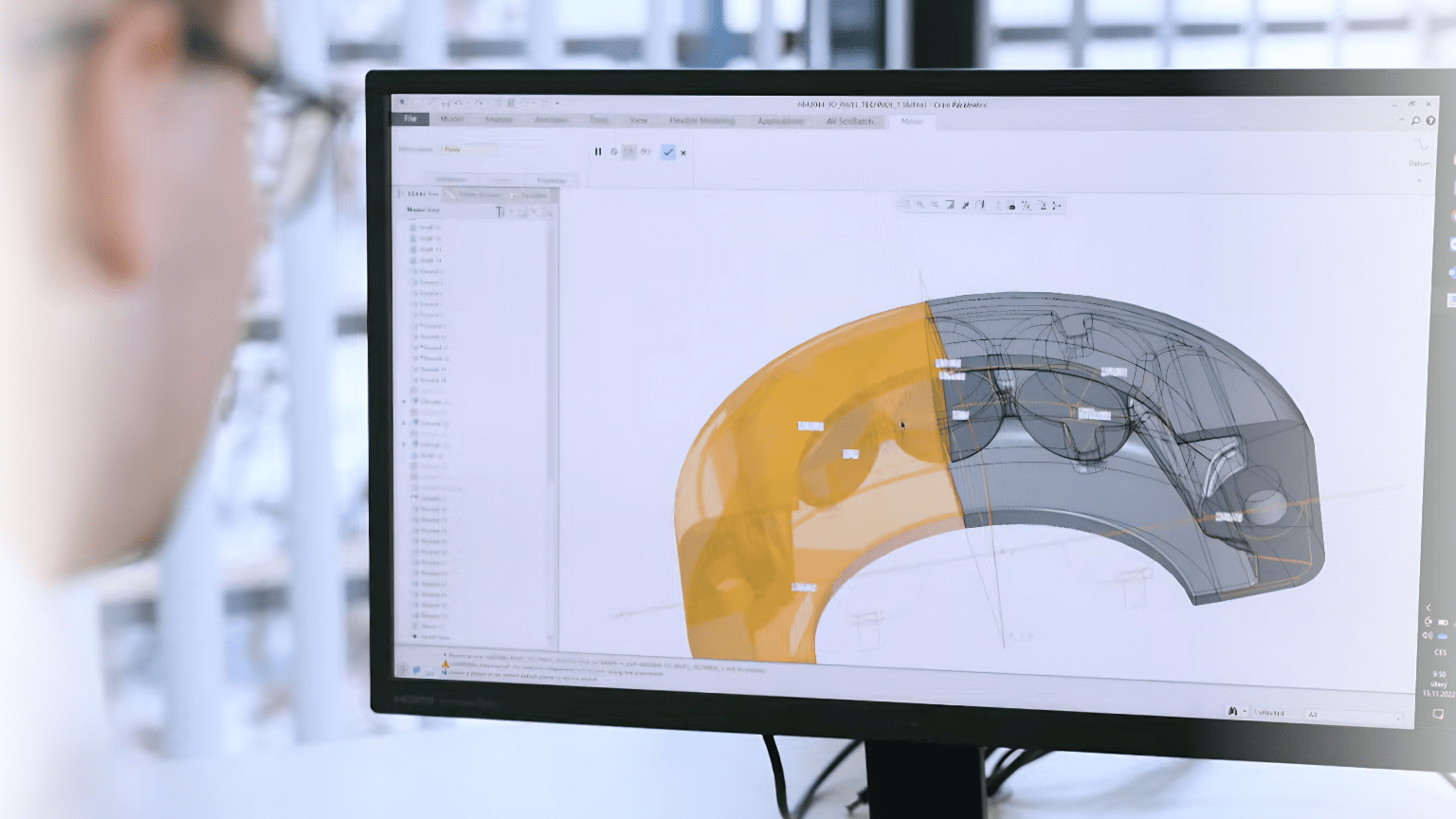
Using advanced algorithms and simulation techniques, the structure and shape of products are optimized. The goal is to minimize the amount and weight of material while maintaining the required strength and functionality of the product.
Optimization of mass and structures
Topological optimization is a powerful mathematical method that enables the creation of lighter, stronger and more innovative products with lower costs and faster development time. In Bran4Industry we manage to optimize the topology and internal structure of bodies for 3D printing as well as for other manufacturing methods, such as casting, machining, etc.
The topological optimization is part of the CARDAM Simul computational environment focused on multiphysics mathematical simulations, which allows to optimize the design with respect to the combination of:
stiffness maximization,
vibration minimisation,
maximum heat transfer efficiency,
optimization of thermal management of injection moulding tools, etc.
Thanks to topological optimization, it is possible to significantly reduce the weight of foundry parts and thus minimize the CO2 carbon footprint.
The method brings a number of savings:
Reduction of weight and material costs: Identifying surplus material and redundant structures in products reduces product weight while reducing material and manufacturing costs. Less material also contributes to sustainability and environmental friendliness.
Increased strength and durability: The designed structures are as strong and durable as possible while minimizing weight. The optimization allows for an even distribution of stresses and loads on the product, increasing its reliability and durability.
Innovation and comprehensive design: The method allows experimentation with new and innovative designs. The algorithms are capable of generating complex structures and shapes that would otherwise be difficult or impossible to develop using traditional design methods.
Rapid development and reduced time to market: Quickly iterating and testing different design variations allows to reduce product development time and accelerate time to market. This gives the company a competitive advantage and allows it to respond to market needs faster than its competitors.
Integration with additive technologies:
Topological optimization is often used in combination with additive technologies (3D printing). Optimized structures can be easily fabricated using additive technologies, allowing the creation of complex and lightweight geometries that would be difficult or impossible to achieve with traditional manufacturing methods.
Cardam has its own unique solution, thanks to which it is the only company on the market that can adapt the computing environment to the requirements of the problem being solved, rather than modifying the problem according to the capabilities of the application. The result is absolutely accurate output with the possibility of controlling it, or real application.
Looking to save material and optimize production through topology optimization?
Deset minut čtení jednou měsíčně, inspirace k nezaplacení.
Your cookie settings
We use cookies and similar technologies (collectively, "cookies") on this website. Detailed information on the use of cookies is provided Privacy Policy.
If you want to use our website only with the necessary technical cookies, click on the button below „Only necessary cookies“. If you agree to the use of all cookies (technical, analytical and advertising), click on the button below "I accept all". If you only want to accept or reject some cookies by category, click the button below "Detailed settings". You can change your cookie settings at any time.
These cookies are necessary for the proper functioning of our website, so it is not possible to disable them. You can set your browser to block these cookies. We warn you that in such a case some parts of the website will not work.
Detailed information about each cookie and its purpose is provided in the Privacy Policy.
Individual cookie files:
Service
Processor
Cookies designation
Status
Dynamic Cookies Bar
Brain4Industry
dcb_dsv, dcb_config
Active
Google Tag Manager
Google LLC - 1600 Amphitheatre Parkway, Mountain View, CA 94043, United States
cookiePreferences
Active
Analytical cookies
These cookies allow us to analyze the use of our website, measure traffic and obtain other information about the operation of the website. The aim is to improve the performance of our website.
Detailed information about each cookie and its purpose is provided in the Privacy Policy.
Individual cookie files:
Service
Processor
Cookies designation
Status
Google Analytics
Google LLC - 1600 Amphitheatre Parkway, Mountain View, CA 94043, United States