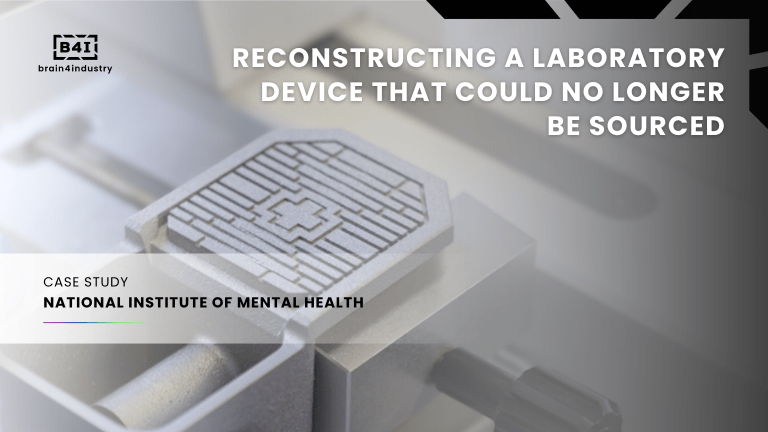
Hybrid Manufacturing: The Precision You Expect. The Freedom You’ve Been Missing.
Hybrid manufacturing is a technology that combines additive manufacturing (3D printing) with traditional methods such as milling or machining. The result is a unique process that brings together the advantages of both worlds: the flexibility and speed of 3D printing with the precision and surface quality of conventional machining.
How does it work in practice?
Material is gradually deposited onto a base metal substrate using 3D printing. At a certain stage, a machining tool is introduced to immediately finish the given part of the component. This cycle is repeated until the final part is created—precise, durable, and often featuring complex geometries that would be impossible to produce using conventional methods alone.
Hybrid manufacturing thus combines the best of both approaches—the machined precision of CNC-produced base parts and the design freedom of additively built structures. It enables the production of components that would otherwise be impossible—or prohibitively expensive and complex—to manufacture.
Hybrid Manufacturing at Brain4Industry
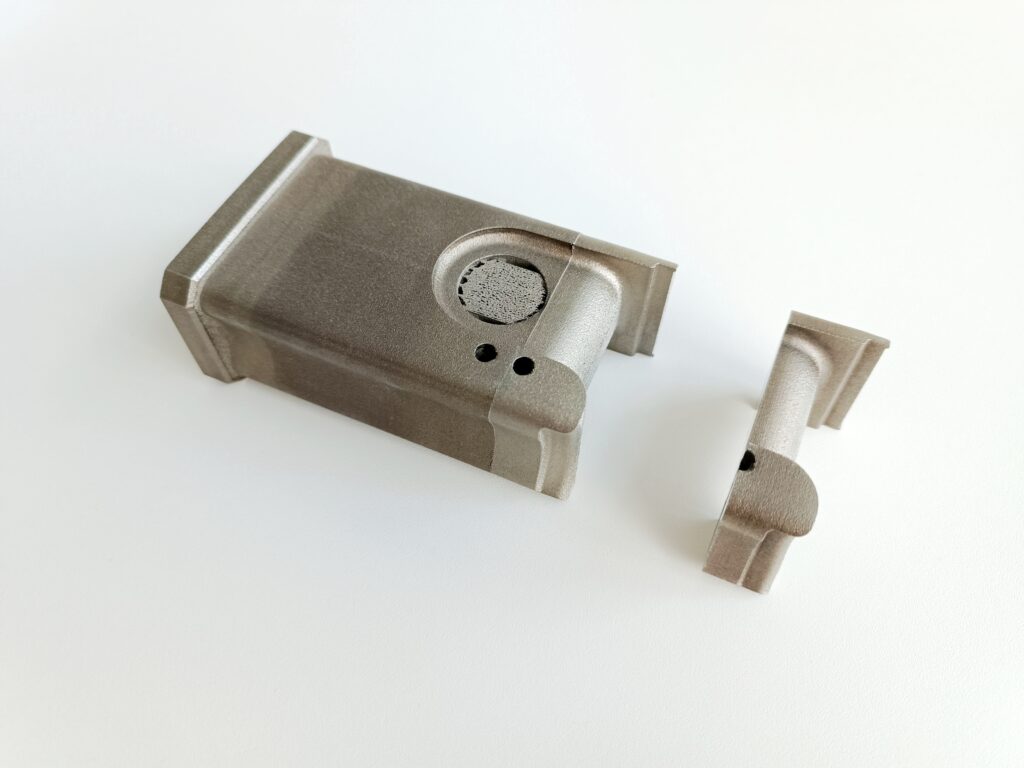
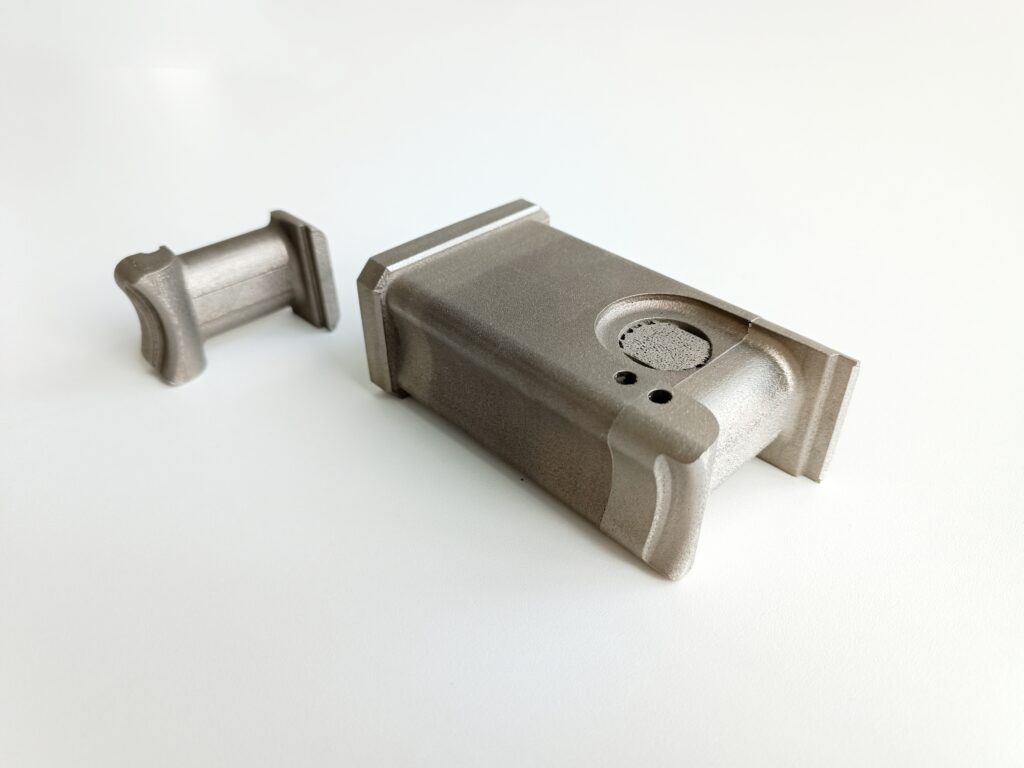
On our Farsoon FS301M system, we print metal directly onto a machined base. The resulting part can then be further machined to achieve the required quality and precision.
The result? A single functional component with combined properties—without compromise.
Most Common Applications
Molds for plastic injection molding or metal casting.
Hybrid design enables the integration of cooling channels with geometries that cannot be drilled—significantly accelerating production cycles.
Faster cycle time = more parts in less time = higher manufacturing efficiency.
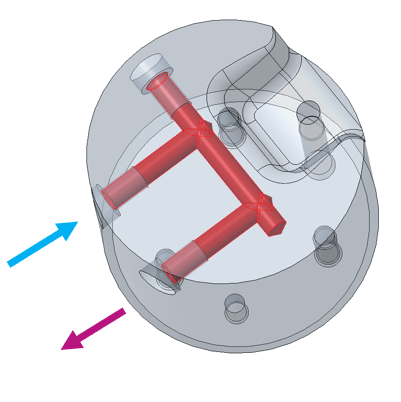
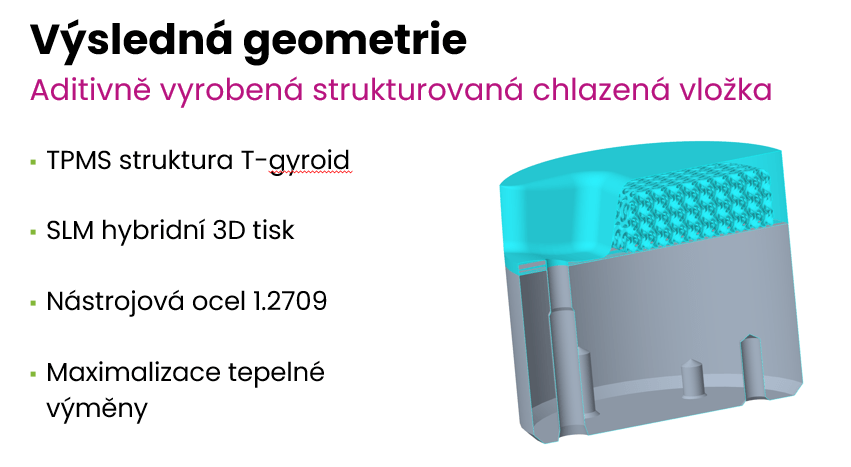
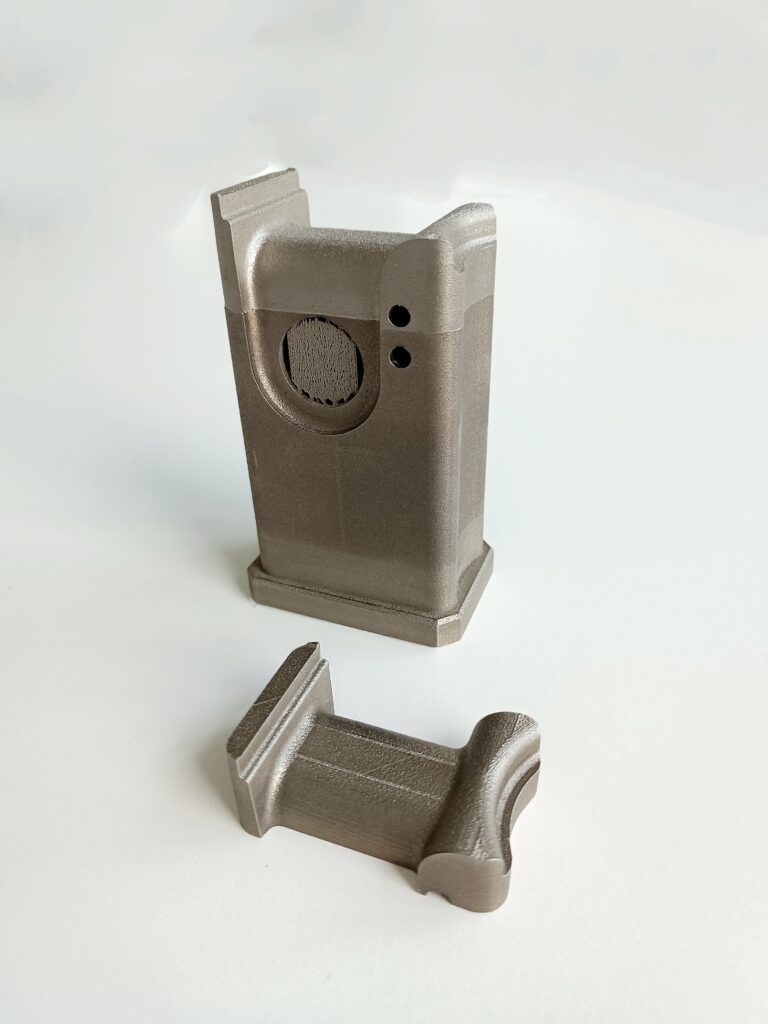
Another example is a tooling fixture made of tool steel, which we designed and manufactured entirely in-house. It is used to precisely secure the base during hybrid manufacturing—ensuring mechanical stability, repeatability, and high-quality output for every part.
What Hybrid Manufacturing Brings
- Higher functionality and added value
- Faster production cycles
- Material savings
Where Does Hybrid Manufacturing Deliver the Most Value?
- Aerospace and automotive: production of components with high demands on strength, weight, and precision
- Energy sector: repair and modification of turbine blades and other components where the combination of new material and precise finishing is critical
- Toolmaking: rapid production of molds and tools with integrated cooling channels and precise machining of critical surfaces
In General
- Repairs: tooling inserts, turbine blades, molds
- Production of new parts: components with complex internal structures and integrated channels
- Prototyping: fast validation of functionality without time-consuming machining
Key Advantages of Hybrid Manufacturing
- Reduced time from design to finished part
- High precision thanks to integrated machining within the process
- Ability to repair existing components instead of full replacement
- Lower production costs for small batches and unique parts
Potential Challenges
- High initial investment in hybrid machines
- Need for highly skilled operators with expertise in both additive and subtractive processes
- Complex integration into existing production workflows, especially in highly regulated environments
Hybrid manufacturing is not just a new technology—it is a pathway to more efficient production and faster development.
Are you facing a similar challenge or looking for ways to combine the freedom of 3D printing with the precision of machining?
Get in touch with us—we’ll be happy to explore the possibilities of hybrid manufacturing with you and show how it can support your specific project.