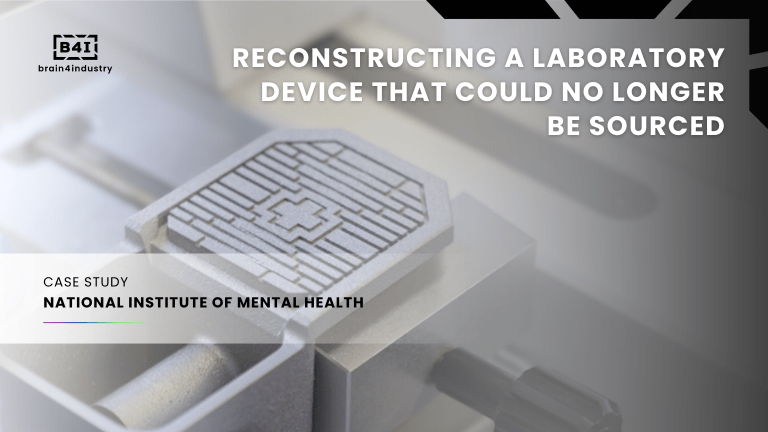
A New Generation of Heat Sinks Enabled by 3D Printing
The development of components with high heat dissipation requirements has long been limited in additive manufacturing by material constraints. Within the Brain4Industry consortium, we therefore set out to explore whether it is now possible to design, print, and test a fully functional metal heat sink for high thermal load applications.
Additive Manufacturing in Thermal Management: Opportunity or Dead End?
Additive manufacturing offers design freedom that conventional machining or casting cannot match. In cooling applications in particular, 3D printing enables the design and optimization of internal flow channels, increased surface area, and the creation of organic structures that promote turbulent flow. However, the key limitations have traditionally been the thermal conductivity of printed materials and their mechanical properties.
The aim of our development was to verify whether a highly efficient heat sink suitable for small-series production can be designed using available 3D printing technologies (SLS/SLM). The key question was: can we combine the design advantages of additive manufacturing with the performance of traditional materials?
From Initial Concept to Final Product
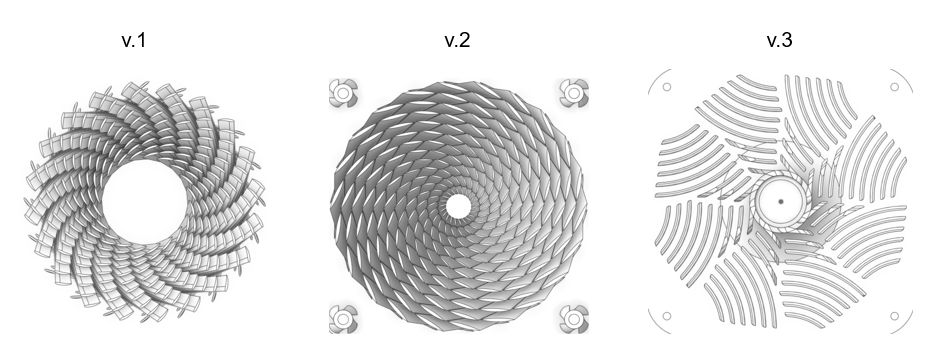
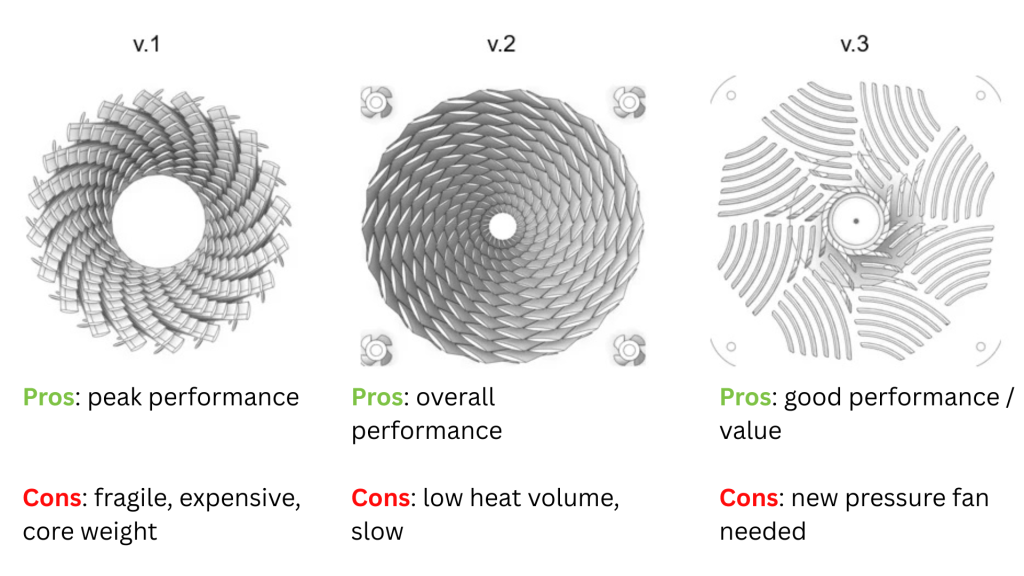
The process began with the design of three different heat sink concepts, which were evaluated in terms of mechanical resistance, heat transfer efficiency, cost, and manufacturability. The development followed a rapid prototyping approach, where individual designs were iteratively tested, refined, and reprinted.
After the validation phase of the plastic model (PA12, SLS technology), the process moved to metal production using SLM (Selective Laser Melting). A key factor in achieving success was the selection of a suitable material: the zirconium–aluminum alloy Aheadd® CP1 from Constellium, which contains no silicon and offers high thermal conductivity along with good printability.
The development did not proceed smoothly—custom print parameterization had to be developed to ensure sufficient homogeneity, low porosity, and the required surface quality of the final part. Testing was carried out on a Farsoon SLM printer, including trial specimens and microstructure development.
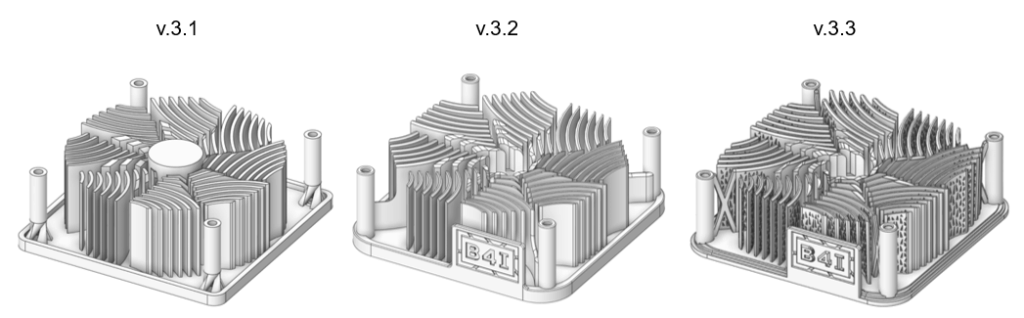
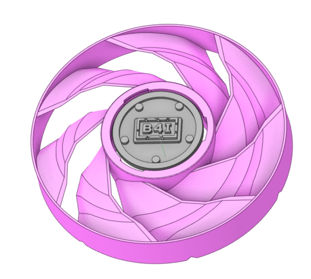
The solution also included the development of a corresponding axial fan with optimized blade geometry, as the performance of the heat sink depends on the effective integration of both passive and active components of the system.
What Did we Validate, and What Does it Mean for Industry?
The development confirmed that SLM technology is now capable of producing high-performance, structurally complex heat sinks that can be applied, for example, in the energy sector, electronics, or the automotive industry.
Key findings:
- The Aheadd® CP1 material met expectations in terms of thermal conductivity and printing stability.
- Additive manufacturing enabled iterative design optimization without the need for costly molds or tooling.
- The as-printed surface finish allowed for high heat transfer efficiency.
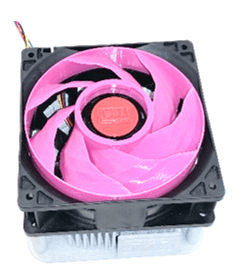
- The integration with a custom-designed axial fan resulted in a functional system ready for testing in real-world applications.
Outlook: Towards Tailored, Custom Manufacturing
Through this project, we at Brain4Industry have validated our ability to design, manufacture, and optimize a heat sink entirely in-house, leveraging the expertise of partners such as CARDAM, Institute of Physics of the CAS, and other consortium members. At the same time, we have gained know-how that can be transferred to other components requiring efficient thermal management.
Additive manufacturing thus represents not only a pathway to product optimization, but also a means of translating research-driven innovations into real-world production with maximum flexibility.