What are the current trends in 3D printing? Where is its development heading?
3D printing is one of the fastest evolving technologies today, with its applications constantly expanding across various industries. Modern additive manufacturing encompasses seven technologies, each developing in its own way. Therefore, as Marek Havel, Head of Additive Technologies at Brain4Industry, points out, talking about general “trends” in 3D printing can be misleading. “Each development direction is closely linked to a specific technology or material. What pushes the boundaries in one industry may not have the same impact in another.”
The common thread, however, remains the dynamic development of these technologies and their capabilities. So where is 3D printing heading today?
Where do you think the biggest shift in 3D printing has occurred?
Certainly, the possibility of mass production through additive manufacturing is a major shift. 3D printing is no longer just a prototyping tool. Today, it can be economical to produce smaller batches using additive manufacturing, especially when continuous changes or rapidly shifting demand for a product are expected.
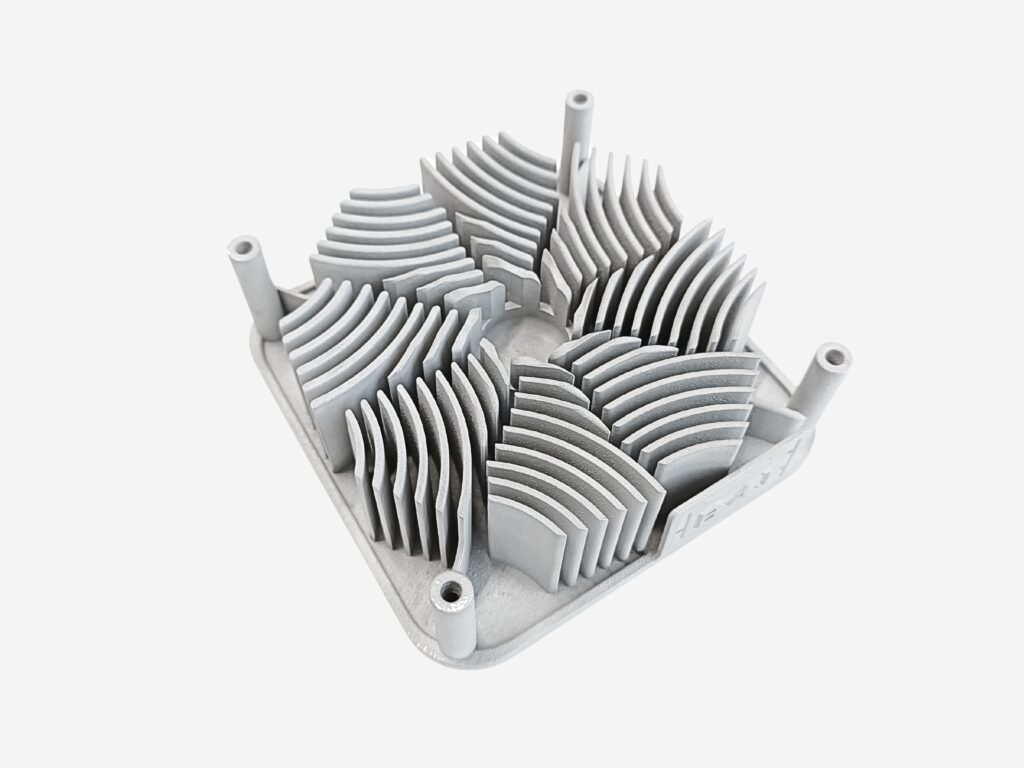
3D printing offers the opportunity to speed up and streamline product development and, most importantly, speed up production preparation, as in additive manufacturing mould making is not required. Ultimately, the proper use of 3D printing in product development will reduce costs, shorten the development process and help bring a better product to market.
Additive manufacturing is inherently associated with various materials and their development. Where is the development of materials for 3D printing going?
The development of new materials is an ongoing process, driven by the desire for higher quality, lower production costs and meeting environmental requirements. A current trend in my opinion is the development of flexible materials, used in technologies like SLA, FDM or Material Jetting. Some of these materials already achieve a Shore hardness of 3A and have properties similar to soft silicone[1]. Recycled[2] and recyclable materials are also gaining increasing attention, including recycled carbon fibre, applicable to SLS technology; laser sintering of powder, which we have at B4I. And then there are biomaterials, such as plant- or seaweed-based polymers[3]. These innovations create new opportunities in industrial manufacturing and healthcare.
[1] Soft Elastic 30A | 3D Printing Materials | Makelab
[2] Shoe soles and heels with a new 3D printing material based on leather waste
[3] 3D printing algae-based materials: Pathway towards 4D bioprinting – ScienceDirect
What about metal materials?
At B4I, we also print metals using SLM technology – sintering metal powder using a laser. For industrial companies, this is an ideal solution for prototyping, producing small batches of products, moulds and so on. An interesting application is the production of spare parts. Companies facing problems with the availability of specific parts or spare parts, long lead times or even the termination of their production, can use 3D printing to quickly replace such shortages, improve efficiency and flexibility of production.
At B4I we work with titanium, aluminium alloys, stainless steel and tool steel. Less common is the production of chrome nickel alloys (e.g. Inconel 718) or copper alloys using additive technologies. Titanium is an exceptional material, with high strength, hardness, high heat resistance, good fatigue properties, and excellent biocompatibility, making it suitable for aerospace, medical, and sports industries.


You mentioned the use of 3D printing in the medical sector. Is this a significant trend?

3D printing has been used in healthcare almost since its inception, but its potential is still growing. The main advantage of additive manufacturing is the possibility of customization, both in terms of design and function. It is these aspects that are perfectly applicable in medicine, whether it is the production of prostheses, implants or even tissue bioprinting, which contributes to personalized patient care.
Our experience at Brain4Industry shows how crucial the role new technologies can play in healthcare is. For example, we have developed personalised 3D-printed orthoses that are significantly lighter and, above all, tailored to each patient.
The development of new materials, which I mentioned earlier, is contributing to the increasingly widespread use of 3D printing in medicine. While titanium is suitable for implants and various replacements, biomaterials or plant-based polymers, thanks to their ecological and biocompatible properties, can be used for things like bandages, surgical absorbable materials, in tissue engineering, or for disposable medical packaging. The applications are very broad indeed.
Artificial intelligence is a big topic these days. What is its role in additive technologies?
Artificial intelligence brings new possibilities throughout the product development process, including 3D printing itself. AI can be involved in modelling, simulation, part optimization, part layout in the printer, all the way to monitoring print quality and optimizing print parameters in real time. AI never gets tired, completes every task, makes decisions based on data, and can optimize every step extremely well. A printer equipped with this system can then print faster, more efficiently and with less waste, which contributes, among other things, to a lower cost of final parts, and often with better quality.
Are companies taking advantage of the possibilities of artificial intelligence in 3D printing today?
Yes, but only to a limited extent so far. At Brain4Industry, we help companies use AI for simulations, predictive machine maintenance or automation of manufacturing and business processes. These technologies increase efficiency and help reduce waste. But at the same time, we see that the industrial deployment of AI is progressing more slowly than in mainstream business, and that’s what we’re trying to change.
The increasing availability of 3D technologies is often mentioned? Is that really true?
For everyday users, yes – hobby printers are getting cheaper, easier and more user-friendly. Automatic platform setup, reliability, filament replacement all become much more user-friendly.
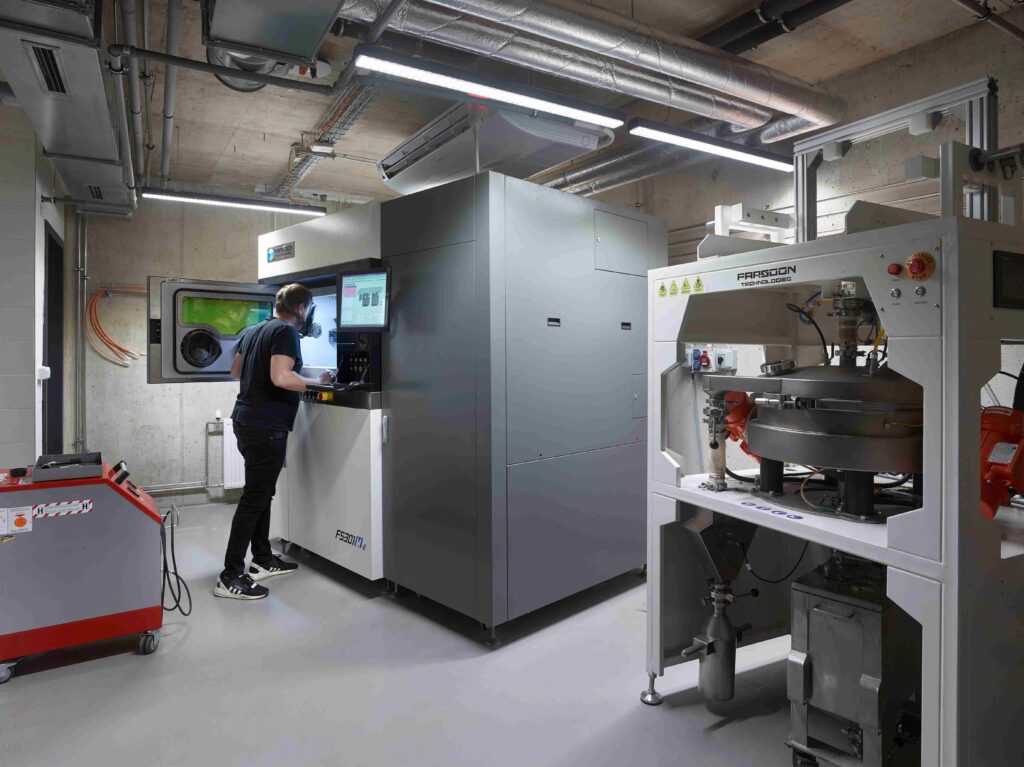
For high-end industrial SLS and SLM printer applications, we at Brain4Industry offer the ability to test the technology – from sample production to material verification – before businesses invest in their own technology. On a specific printer model, they can produce prints or small batches and check whether it matches their ideas and requirements. They can also test or adjust the materials, the resulting finishing options and so on.
We also offer full training as well as education in 3D printing. This way, companies can get complete information and experience before they would invest in the technology, at a very low cost thanks to support from a European programme aimed at small and medium-sized industrial enterprises.
Do companies express interest?
Absolutely. The opportunity to try out the technology, verify its benefits and at the same time receive professional training is very attractive for small companies. We already work with more than 80 companies on various R&D projects, from materials development to process optimization, and the interest of companies is growing. The joint results show that applied research has huge potential in industry and brings benefits to both sides.
Author: Michela Winklerová, Brain4Industry
Autor článku:

Michaela Winklerová
PR & Marketing Manager